
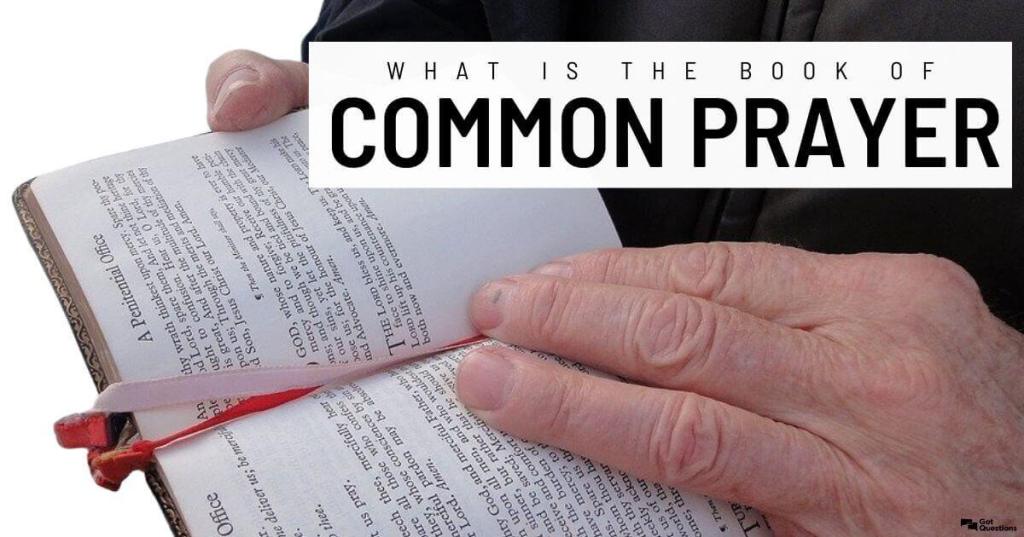
Originally collected, edited, and at least partially written by English Reformer Thomas Cranmer, the Archbishop of Canterbury, the Book of Common Prayer was the first prayer book to include liturgical services published in English. The book includes written prayers, of course, but also much more: catechisms, the “daily office” (essentially a thrice-daily Bible reading program), collects (short prayers to be recited at certain points in the service), full orders of service for important occasions such as holidays and baptisms, a psalter (the biblical psalms arranged for a monthly reading), and a lectionary (a list of readings).
The original 1549 version of the Book of Common Prayer was completed under King Edward VI of England. Updated versions followed, and King James I of England ordered another revision in 1604 to approximately parallel his “Authorised” or King James Version of the Bible. Finally, in 1662, after the English Civil War, the version of the Book of Common Prayer that has remained fairly standard was released.
Not everyone in England accepted the publication of the Book of Common Prayer. Groups outside of the Church of England, called “Nonconformist” churches or “Dissenters,” objected to the king’s insistence that all churches use the Book of Common Prayer in their services. Groups such as the Baptists, Congregationalists, Presbyterians, and Methodists faced church closure if they did not agree to use the prayer book. One preacher in Bedford, England, by the name of John Bunyan refused to use the Book of Common Prayer in his church. He was arrested on November 12, 1660, and spent the next 12 years in jail. Bunyan considered it but a small price to pay for following his conscience and standing for his right to pray in the Spirit, free from the strictures of ecclesiastical authority. While in jail, Bunyan wrote his classic allegory The Pilgrim’s Progress.
The 1662 version of the Book of Common Prayer remains the basis for all current editions. Use of the Book of Common Prayer has expanded beyond the Church of England to many other Anglican denominations and many churches throughout the world. It has been translated into many languages. Churches such as the Lutheran and Presbyterian denominations have largely based their English-language prayer and service books on the Book of Common Prayer.
The Book of Common Prayer is a resource for those who appreciate liturgical worship – and we are proud to use it in all of our worship. It is, like the church, timeless and full of beauty.
 All Hallows, Woolbeding